


Industry News
Data Center Semiconductor Trends in 2024
Views : 1217
Author : JIUZHOU
Update time : 2024-01-05 11:02:18
Artificial intelligence drives industry innovation in server semiconductor technology, increasing computing power and bandwidth while maintaining low energy consumption. The global data center semiconductor market will grow by 12.8% in 2029, reaching US$205 billion
Recently, a research institution released the "Data Center Semiconductor Trends in 2024" report. According to the report, the industry plans to develop new server chips with AI technology. These chips aim to enhance computing power and speed, while also reducing energy consumption. By 2029, the global data center semiconductor market will grow by 12.8% to reach US$205 billion.
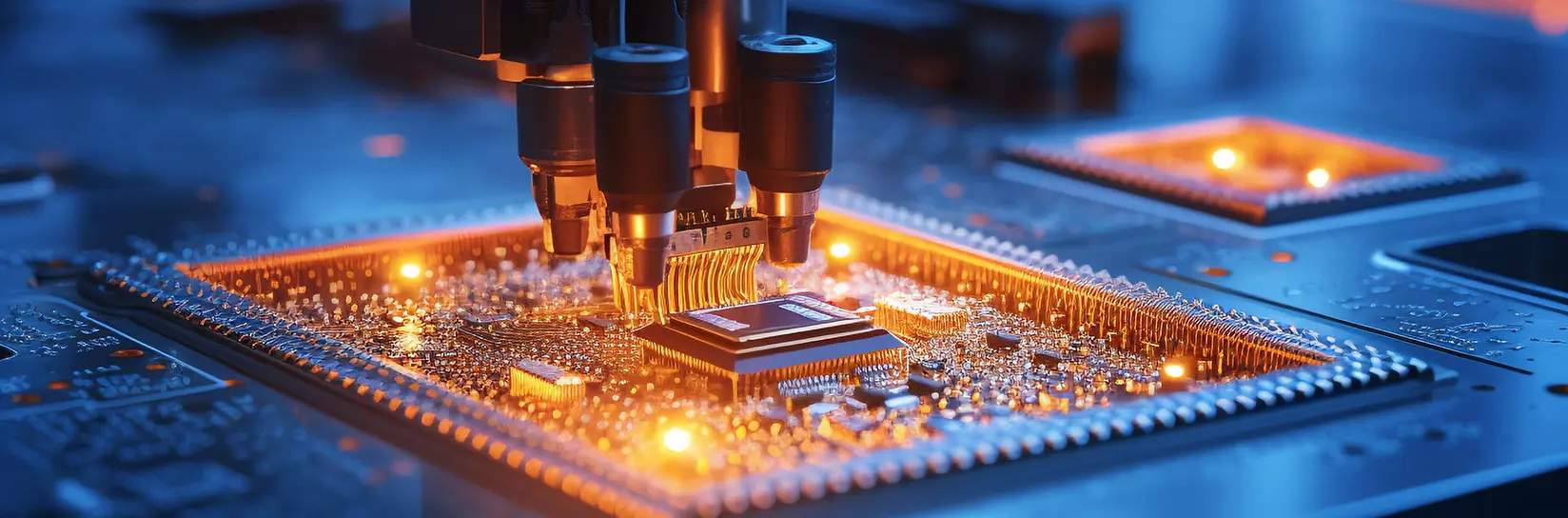
Data center semiconductors contribute significantly to the overall semiconductor market
As AI and ML models continue to advance, the value of semiconductors in servers will increase. This is because more silicon will be needed for storage, processing, and interconnect. This server semiconductor market will benefit the entire semiconductor market.
New technologies will drive market growth by solving challenges like bandwidth, latency, processing power, and power consumption. These innovations will add more value to the semiconductor market.
By 2029, data center semiconductors will be valued at approximately $205 billion, with a yearly growth rate of 12.8%. This will account for approximately 65% of the entire server market. This $205 billion will account for 26% of the entire semiconductor market in 2029.
Memory and Processing will dominate the market, while Photonics will experience significant growth. Memory and Processing will be the dominant forces in the market. Photonics, on the other hand, will see substantial growth.
This growth will be driven by the emergence of photonic chips. These chips will be used for high-speed optical transceivers. Projected that these transceivers will reach 3.2Tb by 2030. In addition to being pluggable, optical I/O and CPO will integrate servers and networks.
AI servers consume nearly ten times more power than standard servers. More power used means power supply units (PSUs) will cost more than 3 kilowatts. In contrast, the market value of PSUs smaller than 1 kW is expected to decline slightly.
This growth will also benefit foundries. By 2029, data centers will consume approximately 25 million wafers, which accounts for approximately 17% of global production.
A host of technological innovations in the data center
In the dynamic environment of server technology, the emergence of disaggregation is reshaping data center infrastructure. AI evolution is driving the segmentation of GPUs traditionally used for AI training. New GPGPU for AI is emerging, and AI ASICs are gaining popularity for their specialization and energy efficiency.
Artificial intelligence's popularity is boosting the use of co-processors, like GPUs, to speed up AI technology. AI training and inference are shifting from CPU to computing servers because of data flow upgrades. GPU and AI ASIC accelerators facilitate this transformation.
In the networking world, data center disaggregation and virtualization leverage SmartNICs and DPUs to offload the CPU. CXL uses PCIe to enhance cache coherence, decomposition, and composability in data centers, with memory as the main focus.
Photonics will become increasingly popular in the future. To achieve faster connections between optical I/O, memory, and processors, we will use it. Additionally, it has the potential to be utilized in data centers. Experts expect this trend to begin in 2028.
Wide-bandgap semiconductors are increasingly powering more efficient power supply units. Innovative packaging methods explore photonics to solve semiconductor integration challenges. Experts think that enhancing computing and memory innovations in the memory unit is important for better performance. This includes computational storage and memory processing.
The report discusses new technologies like neuromorphic chips, optical computing, and quantum computing. These technologies will significantly improve the long-term performance of your servers.
Recently, a research institution released the "Data Center Semiconductor Trends in 2024" report. According to the report, the industry plans to develop new server chips with AI technology. These chips aim to enhance computing power and speed, while also reducing energy consumption. By 2029, the global data center semiconductor market will grow by 12.8% to reach US$205 billion.
Data center semiconductors contribute significantly to the overall semiconductor market
As AI and ML models continue to advance, the value of semiconductors in servers will increase. This is because more silicon will be needed for storage, processing, and interconnect. This server semiconductor market will benefit the entire semiconductor market.
New technologies will drive market growth by solving challenges like bandwidth, latency, processing power, and power consumption. These innovations will add more value to the semiconductor market.
By 2029, data center semiconductors will be valued at approximately $205 billion, with a yearly growth rate of 12.8%. This will account for approximately 65% of the entire server market. This $205 billion will account for 26% of the entire semiconductor market in 2029.
Memory and Processing will dominate the market, while Photonics will experience significant growth. Memory and Processing will be the dominant forces in the market. Photonics, on the other hand, will see substantial growth.
This growth will be driven by the emergence of photonic chips. These chips will be used for high-speed optical transceivers. Projected that these transceivers will reach 3.2Tb by 2030. In addition to being pluggable, optical I/O and CPO will integrate servers and networks.
AI servers consume nearly ten times more power than standard servers. More power used means power supply units (PSUs) will cost more than 3 kilowatts. In contrast, the market value of PSUs smaller than 1 kW is expected to decline slightly.
This growth will also benefit foundries. By 2029, data centers will consume approximately 25 million wafers, which accounts for approximately 17% of global production.
A host of technological innovations in the data center
In the dynamic environment of server technology, the emergence of disaggregation is reshaping data center infrastructure. AI evolution is driving the segmentation of GPUs traditionally used for AI training. New GPGPU for AI is emerging, and AI ASICs are gaining popularity for their specialization and energy efficiency.
Artificial intelligence's popularity is boosting the use of co-processors, like GPUs, to speed up AI technology. AI training and inference are shifting from CPU to computing servers because of data flow upgrades. GPU and AI ASIC accelerators facilitate this transformation.
In the networking world, data center disaggregation and virtualization leverage SmartNICs and DPUs to offload the CPU. CXL uses PCIe to enhance cache coherence, decomposition, and composability in data centers, with memory as the main focus.
Photonics will become increasingly popular in the future. To achieve faster connections between optical I/O, memory, and processors, we will use it. Additionally, it has the potential to be utilized in data centers. Experts expect this trend to begin in 2028.
Wide-bandgap semiconductors are increasingly powering more efficient power supply units. Innovative packaging methods explore photonics to solve semiconductor integration challenges. Experts think that enhancing computing and memory innovations in the memory unit is important for better performance. This includes computational storage and memory processing.
The report discusses new technologies like neuromorphic chips, optical computing, and quantum computing. These technologies will significantly improve the long-term performance of your servers.
Related News
Read More >>
 AI-driven 800G Ramp-up Amplifies Quality Risks
Aug .14.2026
Faced with a surge in orders, leading global manufacturers are increasing production line speeds and shortening delivery cycles. However, the real challenge of this growth goes beyond “can we deliver orders on time?”
 AI Data Centers Drive Optical Chip Breakthroughs
Jul .24.2026
Discover how AI data centers drive optical chip breakthroughs, advancing 800G to 1.6T speeds, silicon photonics, and low-latency CPO tech.
 How AI Turns 5G into a Profit Pivot for Telcos
Jul .09.2026
AI and cloud-native tech help telcos monetize 5G by driving edge computing, network APIs, and smart automation.
 AI Scale-up Switch Chip Market Experiences Explosive Growth
Jun .26.2026
Explore the rapid growth of AI scale-up switch chips powering hyperscale data centers, Ethernet ASICs, and CPO-driven next-gen networking architecture.